How to Build an Audience While You are Still Building the Product
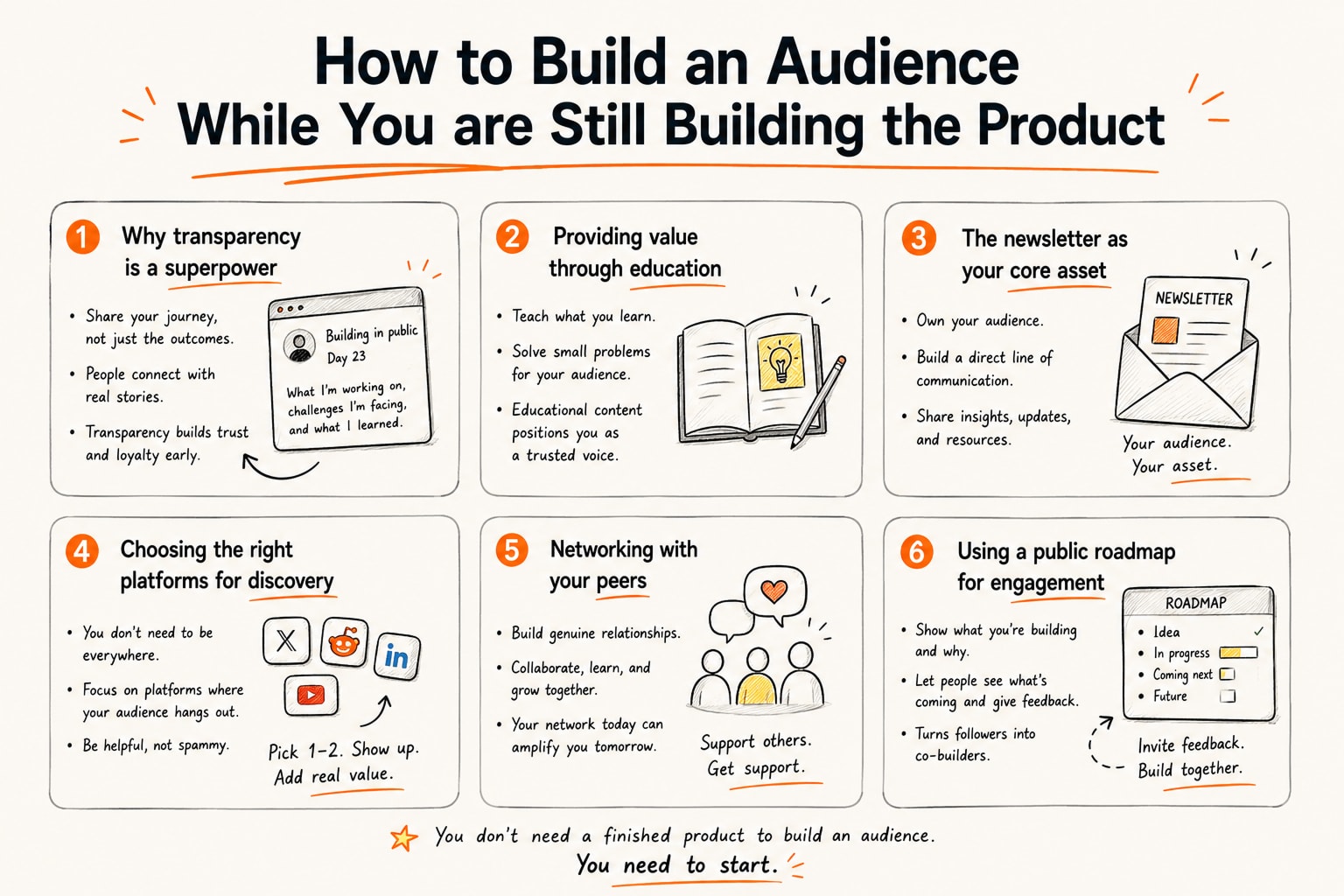
The most common mistake new founders make is waiting until their product is finished to start talking about it. They believe that if they just build something incredible, the world will eventually find it. This approach often leads to a lonely launch where nobody shows up. Building an audience is not something you do after you finish the code. It is something you do alongside the code. By the time you are ready to ship, you should have a group of people who are already invested in your success.
Growing an audience while you are still in the development phase is about creating a connection. You are not just selling a tool; you are sharing a story. People love to support individuals who are working hard to solve a problem. This guide will show you how to turn your daily work into a marketing engine that builds trust and authority before your first user ever signs up.
The myth of the big launch day
Many builders imagine a single day where their product goes viral and thousands of people sign up. While this happens occasionally, it is the exception rather than the rule. For most indie hackers, success is built one person at a time over several months. If you wait until launch day to start your marketing, you are putting an enormous amount of pressure on a single moment.
When you build an audience early, you remove that pressure. You start getting feedback when the product is still flexible. You find your first ten users through personal conversations rather than expensive ads. This early audience acts as a safety net. Even if your big launch day is quiet, you still have a core group of supporters who are using the tool and giving you the data you need to improve.
Why transparency is a superpower
Building in public has become a popular strategy because it works. It involves sharing the raw details of your journey. You talk about the features you are building, the bugs you are fighting, and even the moments when you feel like giving up. This transparency makes you relatable. In a world of polished corporate marketing, honesty is a breath of fresh air.
Sharing the struggle is just as important as sharing the wins. When you talk about a technical challenge you finally solved, you are demonstrating your expertise. When you admit that a certain feature is harder to build than you expected, you are being vulnerable. This combination of competence and vulnerability is the foundation of trust. People do not just want to buy software from a faceless brand; they want to buy from a person they know and respect.
Providing value through education
The best way to get someone to follow you is to help them. You do not need a finished product to provide value. You have knowledge and experiences that others find useful. As an indie hacker, you are learning new things every day. You are choosing a tech stack, designing a user interface, and figuring out how to handle payments.
Turn these lessons into content. If you found a clever way to optimize a database query, write a short post about it. If you discovered a great tool for managing your time, share it. By teaching what you learn, you establish yourself as an authority in your field. People will follow you because they find your updates helpful. When you finally announce your product, they will be much more likely to listen because you have already provided them with free value.
The newsletter as your core asset

Social media is a great way to reach new people, but you do not own the relationship. An algorithm change can instantly hide your posts from your followers. This is why a newsletter is the most important asset for any builder. An email list is a direct line of communication that you control.
You should start a newsletter on day one. It does not have to be long or complicated. A simple weekly update on your progress is enough. Invite people to join your waitlist by offering them behind the scenes access or early bird discounts. When you have a list of five hundred people who have asked to hear from you, your launch day is guaranteed to have at least some traction. You can use your newsletter to ask for feedback, run small surveys, and keep your most loyal supporters excited about what is coming.
Choosing the right platforms for discovery
You cannot be everywhere at once. It is better to be very active on one or two platforms than to be silent on five. Identify where your target audience spends their time. For many indie hackers, platforms like Twitter/X, LinkedIn, and Reddit are the primary places for discovery.
Twitter is excellent for short, frequent updates and networking with other builders. It is a great place to share screenshots and quick thoughts. LinkedIn is becoming a powerful place for professional content and long form stories. Reddit can be a gold mine for finding people who are actively looking for solutions to specific problems. The key is to participate in the community rather than just broadcasting your links. Answer questions, join discussions, and be a genuine member of the group.
The power of small free tools
If you have the skills to build a SaaS, you have the skills to build a small free tool. This is a highly effective way to grow an audience. A free tool solves a tiny part of a larger problem. For example, if you are building a complex project management tool, you could release a simple free calculator that helps people estimate project timelines.
A free tool acts as a lead magnet. It gives people a taste of the quality of your work and brings them to your website. At the end of the free tool, you can invite them to sign up for your newsletter or join the waitlist for your main product. This is a low friction way to turn a casual visitor into a potential customer. It provides immediate value and builds your reputation as a builder who understands the needs of the market.
Networking with your peers
Building a business alone is difficult. You need a support system of people who understand the unique challenges of being an indie hacker. Networking with other founders is not just about getting advice; it is about building a distribution network.
When you support other builders by sharing their work and giving them feedback, they are much more likely to do the same for you. This mutual support creates a ripple effect. When ten other founders share your launch update with their audiences, your reach grows exponentially. Join communities like Indie Hackers or specific Discord groups for founders. Be the person who helps others, and you will find that the community is eager to help you back.
Using a public roadmap for engagement
A product roadmap is often thought of as an internal document, but for an indie hacker, it is a powerful communication tool. Making your roadmap public is one of the best ways to keep an audience engaged while you are still building. It shows people that there is a plan and that progress is being made.
This is where IndieRoadmaps becomes a vital part of your strategy. By hosting your roadmap on a dedicated platform, you are giving your audience a place to see exactly what you are working on. It turns your development process into an interactive experience. You can allow people to vote on the features they are most excited about, which gives you immediate validation.
A public roadmap creates a sense of momentum. When followers see items moving from the planned column to the in progress column and finally to the shipped column, they feel the progress. This visual evidence of your hard work builds a level of trust that words alone cannot achieve. It also gives people a reason to stay on your email list or follow your social profiles. They want to see those goals being met.
The voting system on IndieRoadmaps is a great way to turn passive followers into active stakeholders. When someone votes for a feature, they are telling you that they care about the direction of the product. They are now emotionally invested in seeing that feature come to life. This engagement is the foundation of a loyal community. By the time you launch, you already have a group of people who feel like they helped shape the product.
Creating a consistent habit
Audience building is not a one time task. It is a habit that requires consistency. You do not need to spend hours every day on marketing, but you do need to show up regularly. Whether it is a daily update on social media or a weekly newsletter, staying consistent is how you stay in the minds of your audience.
Set a schedule that you can realistically follow. Maybe you spend thirty minutes every morning sharing what you did the day before. Maybe you take Friday afternoons to write your weekly update. The more you share, the easier it becomes. Over time, you will find that you have built a massive library of content that search engines will index, bringing in even more people to your world.
The psychological benefit for the founder
Building in public and growing an audience also has a significant impact on your own mental health as a founder. Solo development can be isolating. When you share your work and get positive feedback, it provides a much needed boost of dopamine. It reminds you that you are not just writing code for a machine; you are building something for real people.
The accountability that comes with a public audience is also a powerful motivator. When you know that people are waiting for your weekly update or watching your roadmap, you are less likely to procrastinate. This external pressure helps you stay focused on shipping. It turns the long, difficult process of building a product into a series of small, public victories.
Transitioning from audience to customers
The goal of building an audience is to eventually turn them into customers. However, you must be careful not to push too hard too early. Focus on building the relationship first. If you have provided value, shared your journey, and listened to feedback, the transition to selling will feel natural.
When you are ready to launch, your audience will not feel like they are being marketed to. They will feel like they are finally getting access to the tool they have been watching you build for months. They are already convinced of your expertise and the quality of your work. The sale becomes the final step in a long and rewarding relationship.
Summary of the audience building framework
Growing an audience while you build is the most effective way to ensure a successful launch. It involves a shift in mindset from being a silent developer to being an open builder.
Start on day one by sharing your journey and your goals.
Use transparency and vulnerability to build trust with your followers.
Provide free value through education and small helpful tools.
Focus on building a newsletter as your primary direct communication channel.
Be active and helpful in the niche communities where your target audience lives.
Use IndieRoadmaps.com to make your progress visible and your features interactive.
Network with other indie hackers to build a support system and a distribution network.
Stay consistent and turn sharing into a daily or weekly habit.
Building an audience is a long game, but it is one that pays off for the entire life of your business. It turns the uncertainty of a startup into a shared mission. By the time you hit the launch button, you will not be starting from zero. You will be launching with a community at your back, ready to help you succeed.
Final thoughts
Do not wait for your code to be perfect before you show it to the world. Perfection is the enemy of progress. Show the messy parts, the mistakes, and the early versions. People appreciate authenticity more than they appreciate a polished corporate image. Your audience is waiting for you to invite them into the process.
The journey of an indie hacker is a story worth telling. By sharing it, you are not just building an audience, you are building a legacy. You are showing others that it is possible to create something from nothing. Start today by sharing one thing you learned or one challenge you faced. Use your roadmap to show where you are going. Your future customers are already out there. All you have to do is let them in.