How to Launch a Product With Zero Audience (and Still Get Traction)
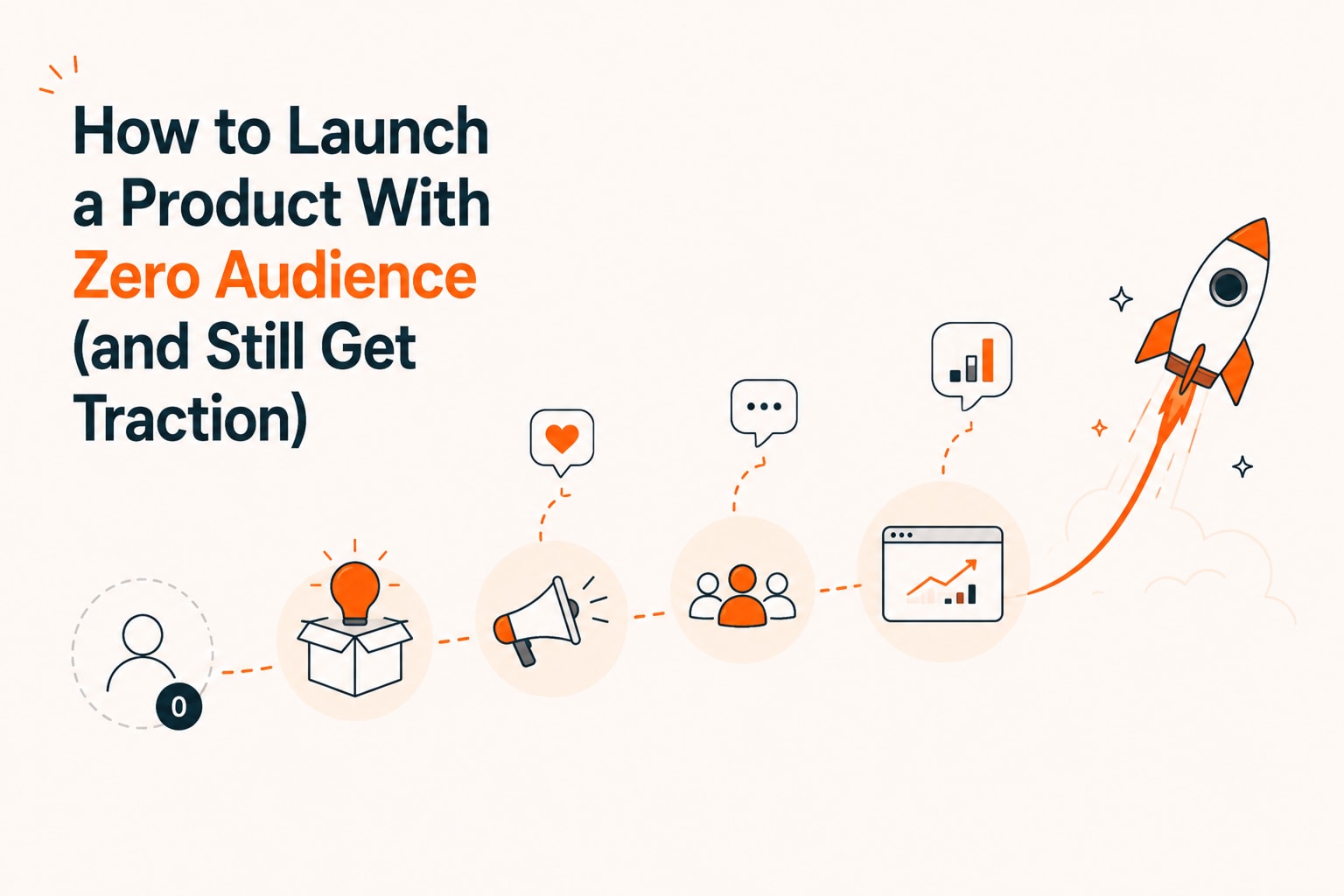
The most common advice given to new founders is to build an audience before they build a product. While this is great in theory, it is often impossible in practice. You might be a developer who prefers writing code to posting on social media. You might be starting in a completely new industry where nobody knows who you are. The idea that you need ten thousand followers to have a successful launch is a myth that keeps many people from ever hitting the publish button.
Launching with zero audience is a different game, but it is one that can be won. It requires you to stop thinking about your own platforms and start thinking about where your potential users are already gathered. You do not need to own the platform to benefit from the people on it. This guide will show you how to hijack existing attention and turn strangers into your first paying customers.
The mindset of the zero audience launch
When you have a large following, a launch is an event. You send one tweet or one email and the traffic flows in. When you have no following, a launch is a process. It is a series of small, intentional actions designed to spark interest in different corners of the internet. You are not looking for a big bang. You are looking for a slow burn that builds momentum over time.
You must be willing to do things that do not scale. In the beginning, your goal is not to reach millions of people. Your goal is to reach ten people who love your product so much that they tell ten more people. This requires a high level of personal engagement. You have to be in the comments, in the forums, and in the direct messages. You have to prove that you are a real person who has built a real solution to a real problem.
Step 1: Go where the pain is already being discussed
People do not hang out on social media looking for products to buy. They hang out there to talk about their lives, their hobbies, and their frustrations. Your first job is to find the places where people are complaining about the problem your product solves.
Look for niche communities on platforms like Reddit, Discord, and Slack. Every profession and every hobby has a community where people ask for advice and share their struggles. Do not go in and post a link to your product immediately. That is the fastest way to get banned. Instead, be helpful. Answer questions. Share your expertise.
When someone posts about a problem that your product solves, explain how they can fix it. Mention that you were so frustrated by this same issue that you built a tool to automate it. Offer them a free trial or a discount in exchange for their feedback. Because you are helping them solve a problem they just complained about, they will see you as a savior rather than a salesperson.
Step 2: Leverage the power of established platforms
Platforms like Product Hunt, Hacker News, and Indie Hackers exist to give new products a stage. These sites have built-in audiences of thousands of people who are looking for the next interesting thing. A successful day on any of these platforms can provide enough initial traction to kickstart your business.
However, you cannot just post and hope for the best. Each platform has its own culture and its own rules. Product Hunt favors products that are visually appealing and easy to understand. Hacker News values technical depth and unique perspectives. You need to tailor your message to the specific audience of each site.
The secret to a good platform launch is engagement. When you post, stay online all day to answer every single comment. Thank people for their feedback. Explain your vision. This activity tells the platform algorithms that your post is generating a lot of interest, which keeps you at the top of the page for longer. It also builds an immediate connection with the people who are discovering you for the first time.
Step 3: Borrow other people's audiences
If you do not have an audience of your own, you can borrow one from someone who does. There are thousands of newsletter creators, podcasters, and micro influencers who are constantly looking for interesting things to share with their followers.
Identify the influencers who talk to your target customers. Do not aim for the giant celebrities. Aim for the people with a few thousand highly engaged followers. These micro influencers are much more likely to respond to a personal email.
Send them a short, respectful message. Tell them you have been following their work and that you built something their audience might find valuable. Offer to give them a free lifetime account so they can try it out for themselves. If they like it, they might mention it in their next update. A single mention from a trusted source can be more valuable than a month of social media posting.
Step 4: Use direct outreach as a validation engine
Direct outreach is often seen as a desperate move, but it is actually one of the most powerful tools for a new founder. It allows you to get your product in front of exactly the right person at exactly the right time.
Find people on LinkedIn or Twitter/X who fit your ideal customer profile. Send them a message that is focused entirely on them. Mention a specific problem they might be having and ask if they would be open to trying a new solution you are building. Do not try to sell them immediately. Ask for their advice.
People love to give advice. It makes them feel important. When you ask for feedback on your product, you are building a relationship. If they give you a suggestion and you actually implement it, they become invested in your success. They are much more likely to become a paying customer because they feel like they helped build the product. This unscalable work is how you build a foundation of loyal users who will stay with you for years.
Step 5: Content as a long term distribution channel
While you are doing the manual work of outreach and community engagement, you should also be planting the seeds for long term growth. Content marketing and SEO are the best ways to ensure that people can find your product even when you are not actively promoting it.
Start by writing about the problems your product solves. Do not just write about your features. Write about the industry trends, the common mistakes people make, and the lessons you have learned as a founder. If you provide genuine value, people will naturally want to see what else you have built.
This content does not need to be a massive blog post. It can be a series of short updates or a public log of your progress. This is the core of the build in public strategy. By sharing your journey, you are creating a narrative that people can follow. They are not just buying a piece of software; they are supporting a person who is trying to build something great. Over time, this content will start to rank in search engines and bring in a steady stream of new users.
The role of transparency in building trust
When you have no audience and no brand, trust is your most valuable currency. You have to prove that you are not going to disappear next week. One of the best ways to build this trust is through transparency.
Show people what you are working on. Be honest about your goals and your challenges. When people see that you are actively improving the product and that you have a plan for the future, they feel much more comfortable giving you their money.
This transparency turns a cold transaction into a collaborative relationship. It shows that you value your users and that you are committed to solving their problems. In a world of faceless corporations, being a visible and honest founder is a massive competitive advantage. It is the bridge that turns a stranger into a follower and eventually into a customer.
How IndieRoadmaps helps zero audience founders
Launching with no audience is about creating signals of life. You want to show the world that your product is moving forward. This is exactly why IndieRoadmaps is such a vital tool for the new indie hacker. It gives you a professional way to display your progress and your plans.
When you link to your roadmap from your landing page or your social media profile, you are providing immediate proof of your commitment. You are showing potential users that you have a vision that extends beyond today. This reduces the risk they feel when signing up for a new and unproven tool. They can see exactly what features are coming and what you have already accomplished.
IndieRoadmaps also helps you capture interest from the people you are reaching through your outreach efforts. Instead of just asking them to sign up for a newsletter, you can ask them to vote on the features they want to see next. This gives them a reason to interact with your brand and stay engaged with your progress. It turns a one-way launch into a two-way conversation.
The platform also helps with discovery. Because your roadmap is public and indexed by search engines, it can act as an additional landing page for people looking for specific solutions. It gives you another way to be found by the very people you are trying to reach. For a founder starting from zero, every additional signal of life is a step toward success.
By using IndieRoadmaps, you are building a history of your work. As you move items to the shipped column, you are creating a track record of reliability. This history is what will eventually grow your audience and make your next launch much easier. It is the foundation of a professional and transparent brand.
Summary of the zero audience launch strategy
Identify the niche communities where your target users are already talking about their problems.
Be a helpful member of the community before you ever ask for anything in return.
Use launch platforms like Product Hunt to get a burst of initial attention.
Reach out to micro influencers and offer them value in exchange for a mention.
Perform direct outreach to get deep feedback and build early relationships.
Share your progress publicly to build trust and show your commitment.
Use IndieRoadmaps to turn your plans into a marketing and validation engine.
Launching with no audience is not a disadvantage. It is an opportunity to build a business that is grounded in real user needs and genuine relationships. It forces you to be scrappy, to be honest, and to be helpful. These are the qualities that lead to long term success as an indie hacker.
Do not wait for the perfect time or the perfect number of followers. The best time to launch was yesterday. The second best time is today. Go where the people are, solve their problems, and show them where you are going. Your audience will find you because you are providing something they cannot find anywhere else. Start your journey today and let your roadmap guide you to your first hundred customers.