Build in Public: The Complete Guide for Indie Hackers in 2026
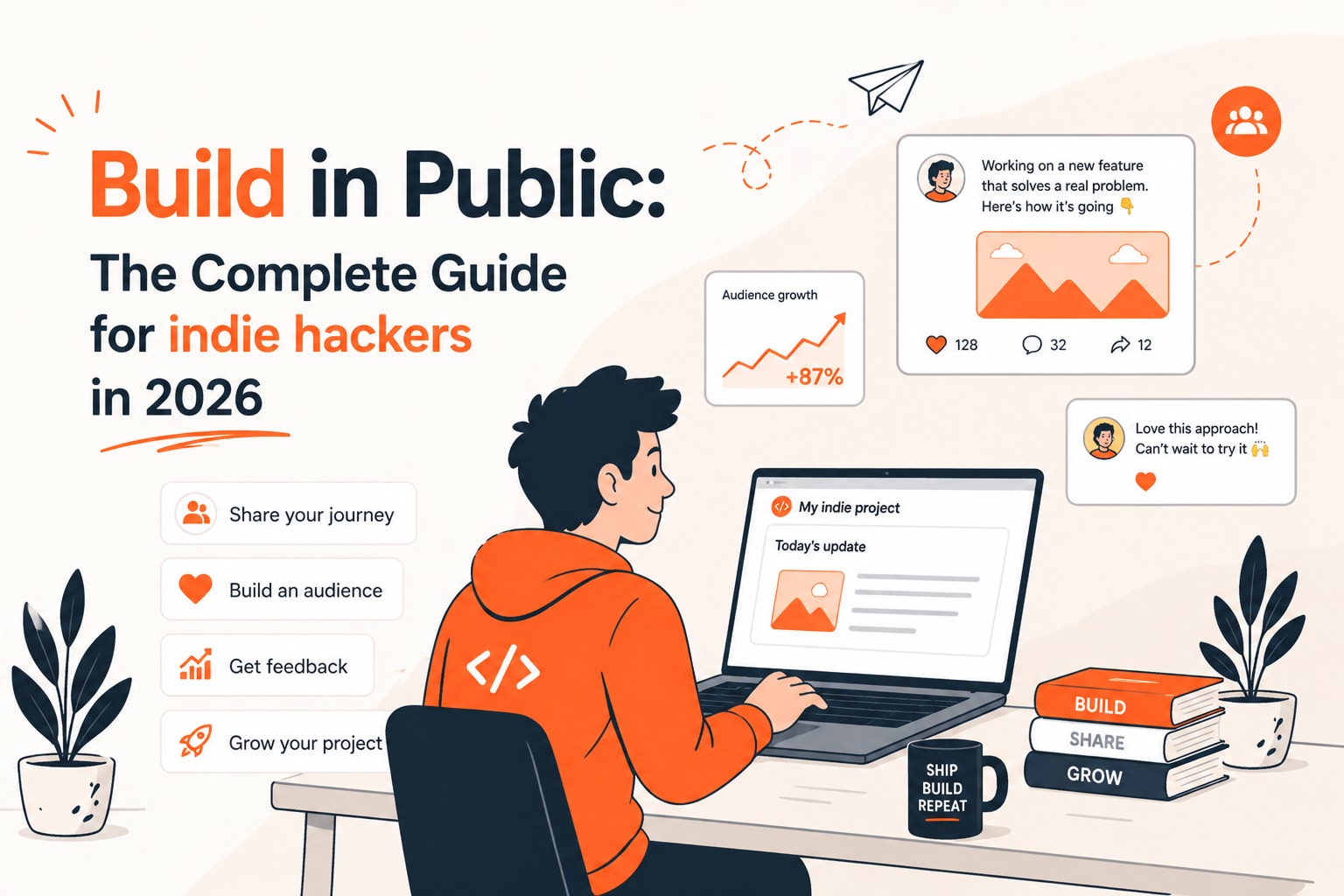
The concept of building in public has moved from a niche trend to a standard operating procedure for any successful SaaS founder. In the early days of software development, founders often worked in a vacuum for months or even years. They would hide their code and their ideas until a big launch day arrived. Most of the time, those launches failed because the product did not solve a real problem. Building in public changes this dynamic by bringing the audience into the development process from day one.
For an indie hacker, building in public is the most effective way to create a distribution channel without spending money on ads. It turns the journey of creation into a story that people can follow. This story creates trust and authority. When people see the struggles and the small wins behind a product, they are more likely to become loyal customers. This guide covers everything an indie hacker needs to know about mastering this strategy.
Why transparency is your greatest advantage
The biggest fear for a new indie hacker is that someone will steal their idea. This leads many to stay in stealth mode. However, the reality of the current market is that ideas are cheap. Execution is where the real value lies. By sharing your progress, you are not just giving away secrets. You are building a reputation that a copycat cannot easily replicate.
Transparency acts as a filter. It attracts the right kind of users who want to see you succeed. It also provides immediate feedback. If you share a mockup of a new feature and nobody reacts, you might have saved yourself a week of wasted coding. This level of validation is impossible to get if you are building in secret.
The strategic benefits of being open
Building in public offers three main benefits that are essential for any SaaS founder.
The first is early validation. You can test your assumptions before you write a single line of code. By sharing your thoughts on a problem or a potential solution, you can see if there is genuine interest in the market.
The second benefit is community building. A community is a group of people who are invested in your success. They will give you feedback, report bugs, and tell their friends about your product. This organic growth is much more sustainable than trying to buy users through traditional marketing.
The third benefit is accountability. When you announce your goals to the world, you feel a natural pressure to follow through. This is especially helpful for solo founders who do not have a boss or a team to keep them on track. Sharing your product roadmap publicly makes your commitments real.
Choosing your channels
There are many places where an indie hacker can share their journey. The most popular choice remains social media platforms like Twitter/X or WIP. These platforms are designed for short updates and high engagement. They allow you to connect with other builders and potential customers in real time.
Newsletters are another powerful tool. While social media is great for reach, a newsletter allows for deeper connection. You can share longer stories, detailed metrics, and personal reflections. Since you own your email list, you do not have to worry about algorithm changes affecting your visibility.
Dedicated communities for indie hackers are also valuable. Sites like Indie Hackers, WIP or various Discord groups provide a safe space to discuss the technical and emotional challenges of building a business. These communities often understand the nuances of the journey better than the general public.
What to share with your audience
Many founders struggle with what they should actually post. The key is to be helpful and authentic. You do not have to share every single detail of your life, but you should share the parts that matter to your business.
Start with your milestones. Share when you reach your first ten users or when you hit a specific revenue target. These updates show that your product is growing and that people are finding value in it. Metrics like monthly recurring revenue are especially popular in the indie hacker community.
Share your technical challenges and solutions. If you find a clever way to solve a bug or optimize your database, write about it. This establishes you as an expert in your field and provides value to other developers who might be facing similar issues.
Do not be afraid to share your failures. If a launch goes poorly or if you lose a big customer, talk about it. Explain what happened and what you learned. This level of honesty is rare and it builds immense trust with your audience. It shows that you are a real person and not just a marketing machine.
How to use a product roadmap for marketing
A product roadmap is often viewed as an internal planning tool, but for an indie hacker, it is a powerful marketing asset. A public roadmap tells your users that you have a plan. It shows them that you are committed to the long term success of the product.
When users see that their requested features are on the roadmap, they feel heard. They are more likely to stick around because they know that the product is evolving in a direction that helps them. You can use your roadmap to drive engagement by letting users vote on what you should build next.
This approach turns your development process into a collaborative effort. Your users become stakeholders in the product. This reduces churn and increases the likelihood that they will recommend your tool to others.
Managing the risks of building in public
While the benefits are significant, there are risks to being so open. The most common concern is the emotional toll of constant visibility. Being an indie hacker is already stressful, and adding the pressure of a public audience can lead to burnout. It is important to set boundaries. Decide what you are comfortable sharing and what you want to keep private.
Another risk is the potential for distraction. Spending too much time on social media can take away from the actual work of building the product. The goal of building in public is to help your business grow, not to become a full time content creator. You need to find a balance that works for you.
There is also the risk of clones. While execution is the main moat, sharing your exact tactics can make it easier for others to follow in your footsteps. Focus on building a unique brand and a deep relationship with your customers. These are things that are very difficult to copy.
Best build-in-public practices for 2026
The landscape of indie hacking is always changing. To succeed today, you need to be more strategic with your transparency. Focus on high quality interactions rather than just high volume posting. Engage deeply with the people who comment on your updates.
Video has become an essential part of the journey. Short clips of you working or quick walkthroughs of new features are much more engaging than plain text. They allow people to see the face behind the product and hear your voice. This adds another layer of trust.
Automation can help you stay consistent without taking up too much of your time. Use tools to schedule your posts and track your metrics. This allows you to focus on the core interaction of your product while still maintaining a presence online.
The importance of charging immediately
One of the biggest mistakes a SaaS founder can make is waiting too long to ask for money. Many founders think they need to build more features before the product is worth paying for. In reality, the best way to validate your product is to see if people will pay for it.
Building in public can help with this. You can talk about your pricing experiments and your revenue goals. This primes your audience for the fact that your product is a business and not just a hobby. Be clear about the value you are providing and do not be afraid to charge what you are worth.
How to start today
If you have an idea for a product, start sharing it now. You do not need a website or a finished MVP. You just need a place to write and a few people who are interested in the problem you are solving. Talk about the pain points you are seeing and how you plan to fix them.
As you begin to build, document the process. Take screenshots of your design iterations. Write about the tech stack you chose and why. These small updates will begin to build the foundation of your audience. By the time you are ready to launch, you will already have a group of people who are excited to try what you have made.
Consistency is more important than perfection. You do not need a professional production team to build in public. You just need to show up and be honest about where you are. The more you share, the easier it becomes.
Closing thoughts and next steps
Building in public is a long term game. It is about building a brand that can outlast any single product. It is about creating a network of peers and customers who support your journey as an indie hacker.
A key part of this journey is staying organized and keeping your audience informed. This is why having a central place for your plans is so helpful. IndieRoadmaps.com was created to give solo founders a simple and effective way to share their vision.
By using IndieRoadmaps, you can move your roadmap out of private spreadsheets and into the light. It allows you to gather feedback, show your progress, and build accountability with ease. It is a tool designed specifically for the needs of the modern startup founder who understands the power of transparency.
Whether you are just starting your first project or you are a seasoned builder, sharing your roadmap is a vital step. It turns your goals into a shared mission. Start your journey today and see how building in public can transform your business.