The Indie Hacker’s Guide to Shipping Features People Actually Want
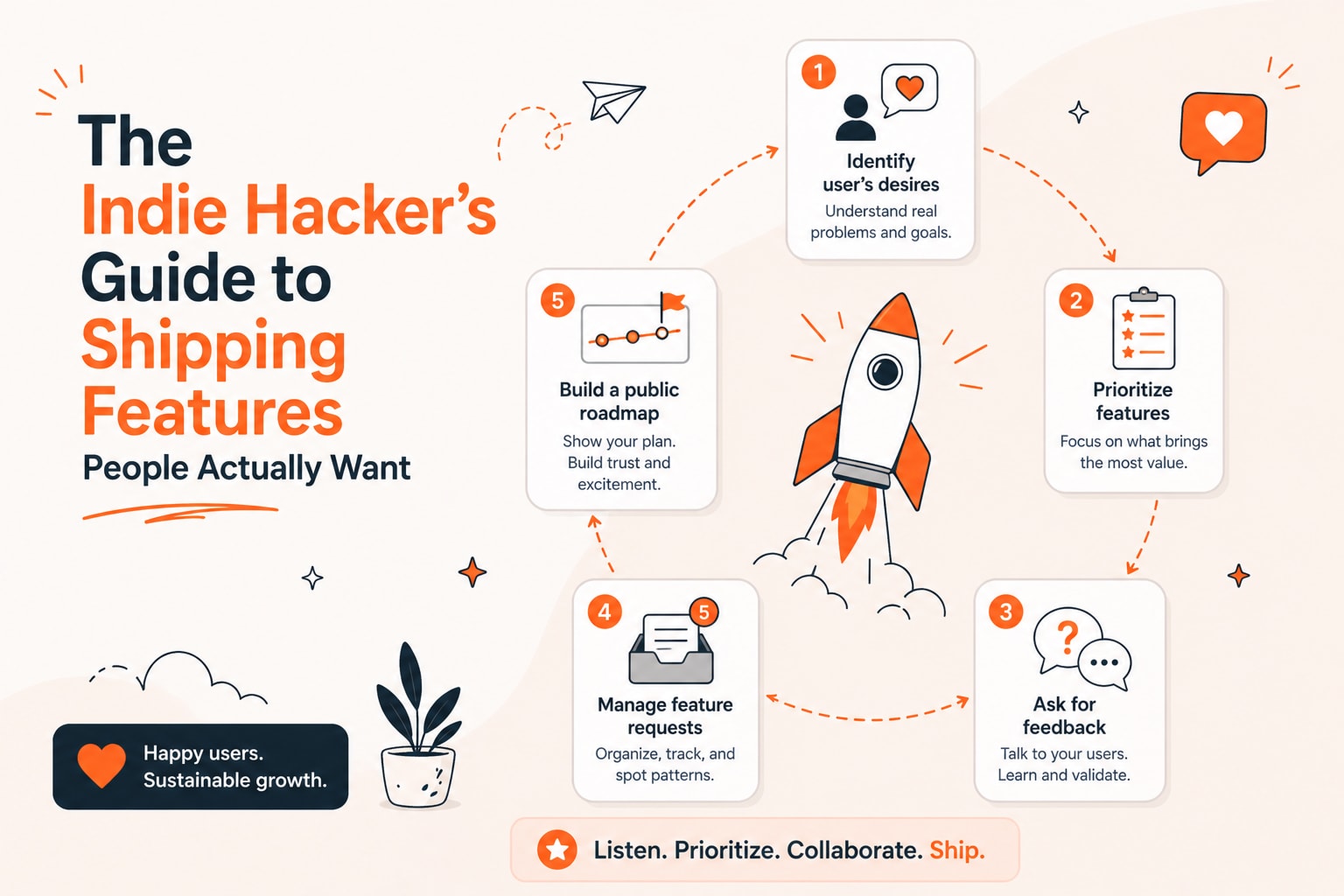
The most dangerous thing an indie hacker can do is spend a month building a feature that nobody asked for and nobody will use. We have all been there. You get a sudden burst of inspiration late at night. You imagine how this new functionality will revolutionize your product. You see the vision so clearly that you start coding immediately. You skip sleep, you ignore your friends, and you push yourself to the limit to get it done. Then you launch it and the analytics show zero clicks. This is the reality of building in a bubble.
Shipping features is not just about writing code and pushing it to a server. It is a strategic process that requires a deep understanding of your users and a ruthless focus on value. As a solo founder, your time is your most precious asset. You cannot afford to waste it on things that do not move the needle. This guide explores the mindset and the practical steps needed to ensure every feature you ship is something your audience truly desires.
The trap of the perfect feature
Many builders believe that their product is just one feature away from success. They think that if they can just add that one specific integration or that one advanced dashboard, users will suddenly flock to their site. This is rarely true. Success in the software world is usually the result of solving a core problem exceptionally well, not having the longest list of features.
When you focus on adding more things, you increase the complexity of your product. More features mean more code to maintain, more bugs to fix, and more things for your users to learn. This complexity can actually drive people away. A clean, simple tool that does one thing perfectly is often more valuable than a bloated tool that tries to do everything.
Identifying what people actually want
Before you open your code editor, you need to be sure there is a demand for what you are about to build. This sounds obvious, but it is a step many founders skip because it is hard work. You need to get out of your head and into the heads of your customers.
One of the best ways to find out what people want is to look at where they are struggling. Pay attention to the support emails you receive. Look for common themes in the questions people ask. If five different people ask how to export their data, you have found a potential feature.
Another source of information is your competitors. Look at their forums or their public feedback boards. What are their users complaining about? If you can solve a problem that a larger competitor is ignoring, you have a major advantage. However, do not just copy their features. Copying lead to a race to the bottom. Instead, look for the underlying needs that those features are trying to satisfy.
Use the framework of high impact and low effort
As an indie hacker, you need to be efficient. You should prioritize features that provide the most value for the least amount of work. A simple way to visualize this is with a table.
Feature Type | Value to User | Effort to Build | Priority |
|---|---|---|---|
Quick Wins | High | Low | Very High |
Big Projects | High | High | Medium |
Distractions | Low | Low | Low |
Money Pits | Low | High | Avoid |
Focus on the quick wins first. These are the small changes that make a big difference in the user experience. It could be a simple UI tweak that makes a common task easier or a new filter that helps users find their data faster. These features keep your product feeling fresh and show your users that you are listening to them.
The art of the small ship
When you decide to build a larger feature, do not try to build the whole thing at once. This leads to long development cycles where you are not getting any feedback. Instead, break the feature down into the smallest possible version that still provides value.
This is often called the minimum viable feature (MVF). If you want to build a complex reporting system, start by providing a simple CSV export. See if people use it. If they do, then you can build a basic table view. If they use that, then you can add charts and graphs. By shipping in small increments, you reduce the risk of building something that nobody wants. You also get the satisfaction of shipping more frequently, which keeps your momentum high.
Shipping small and often is the best way to stay connected to your market. Every release is an opportunity to learn something new about your users.
How to ask for feedback without being annoying
You need feedback to know if you are on the right track, but you do not want to constantly pester your users. The key is to make it easy for them to share their thoughts without interrupting their workflow.
One effective method is to use a simple feedback button inside your app. It should be subtle but accessible. When a user clicks it, they should be able to quickly type a few words and hit send. Do not ask for their life story. Just ask what they think of the new feature or what they would like to see next.
You can also use targeted surveys. Instead of sending a general email to everyone, send a short survey to people who have actually used the feature you just shipped. Ask them specific questions about their experience. Was it easy to find? Did it solve their problem? What was missing?
Managing the noise of feature requests
Once you have a growing user base, the feature requests will start pouring in. This is a good problem to have, but it can also be overwhelming. Everyone has a different idea of what your product should be. If you try to build everything everyone asks for, your product will become a mess.
You need to become comfortable with saying no. Your job is not to build what people ask for; it is to solve the problems they have. Sometimes the best way to solve a problem is not by adding a new feature, but by improving an existing one or even removing a confusing one.
When you receive a request, ask yourself if it aligns with the core vision of your product. Does it help your ideal customer? Will it benefit a large portion of your users, or is it just for one specific person? If it does not fit, politely decline. You can explain your reasoning, which most users will appreciate.
The role of documentation in shipping
Shipping a feature also means telling people it exists and explaining how to use it. If you build something great but nobody knows how to use it, you might as well have not built it at all.
Good documentation is essential for an indie hacker. It reduces the number of support emails you have to answer and helps your users get more value out of your product. Every time you ship a significant feature, update your help docs. Use clear language and include screenshots if possible.
You should also announce your new features. A simple email to your users or a post on your blog can go a long way. Highlight the benefits of the new feature and show them how it can help them. This keeps your audience engaged and reminds them why they are using your tool in the first place.
Measuring success after the ship
How do you know if a feature was a success? You need to look at the data. Before you ship, decide what success looks like. Is it a certain number of people using the feature? Is it a decrease in support tickets related to a specific problem?
Track the usage of your new features. If you see that only a tiny fraction of your users are engaging with it, you need to find out why. Maybe it is hard to find. Maybe the UI is confusing. Or maybe, despite your best efforts, it just was not something people actually wanted.
Do not be afraid to remove features that are not working. This is a difficult thing to do, but it is necessary for keeping your product clean and focused. If a feature is causing more trouble than it is worth, cut it out. Your users will thank you for it in the long run.
Using your roadmap as a filter
A public roadmap is one of the best tools for an indie hacker to stay focused. It acts as a filter for all your ideas and feature requests. When everything is out in the open, it becomes much easier to see what is truly important.
Your roadmap should be a reflection of your priorities. It shows your users that you have a plan and that you are making progress. When you add a feature to your roadmap, you are making a public commitment. This accountability can be a powerful motivator to keep shipping.
It also allows your users to participate in the process. By letting them vote on upcoming features, you get a clear signal of what the community values most. This data is invaluable when you are trying to decide what to build next. It takes the guesswork out of the process and ensures that your efforts are aligned with the needs of your market.
Why IndieRoadmaps was created for builders
Managing a roadmap and a constant stream of feedback is a lot of work for a solo founder. This is exactly why IndieRoadmaps exists. It was designed from the ground up to help indie hackers ship the right features.
The platform makes it incredibly easy to create a professional, public roadmap in minutes. You do not have to worry about design or technical setup. You just focus on your goals. By having a central place for your vision, you can easily direct users to see what is coming next and get their input.
The voting system on IndieRoadmaps is a simple but effective way to validate your ideas. It gives your audience a voice and gives you the data you need to prioritize your work. Instead of guessing, you can look at your dashboard and see exactly what features are getting the most traction. This level of clarity is a game changer for any indie hacker.
Beyond validation, IndieRoadmaps helps you build a community around your product. When people see that you are actively updating your roadmap and listening to their feedback, they feel a sense of ownership. They become more than just users; they become advocates for your brand. This kind of loyalty is impossible to buy.
Final thoughts on the shipping mindset
Shipping features people actually want is a skill that takes time to develop. It requires a balance of intuition and data. You have to be willing to listen to your users, but you also have to be strong enough to say no when an idea does not fit your vision.
The most successful indie hackers are those who understand that their product is never finished. It is an evolving solution to a persistent problem. By focusing on small, meaningful improvements and staying close to your audience, you can build something that people truly love.
Stop building for the sake of building. Start building for the sake of your users. Look at your roadmap, listen to your feedback, and ship with purpose. Every feature should be a step toward a better, more valuable product. The more you focus on what people actually want, the more successful your journey as an indie hacker will be.
Summary of the shipping process
Identify the core problem you are solving and stick to it.
Look for patterns in support emails and competitor feedback.
Prioritize features based on impact and effort.
Ship the smallest possible version to get early feedback.
Use subtle ways to ask for input without annoying users.
Be willing to say no to requests that do not align with your vision.
Keep your documentation updated and announce every major ship.
Track usage data to see if your features are actually working.
Maintain a public roadmap to stay accountable and validate your plans.
Use tools like IndieRoadmaps to simplify the entire process.
By following these principles, you will find that you spend less time coding in the dark and more time delivering real value. This is how you build a product that stands the test of time and truly makes a difference in the lives of your users. Focus on the work that matters, and the results will follow.