Product roadmap tools for indie hackers (Updated for 2026)
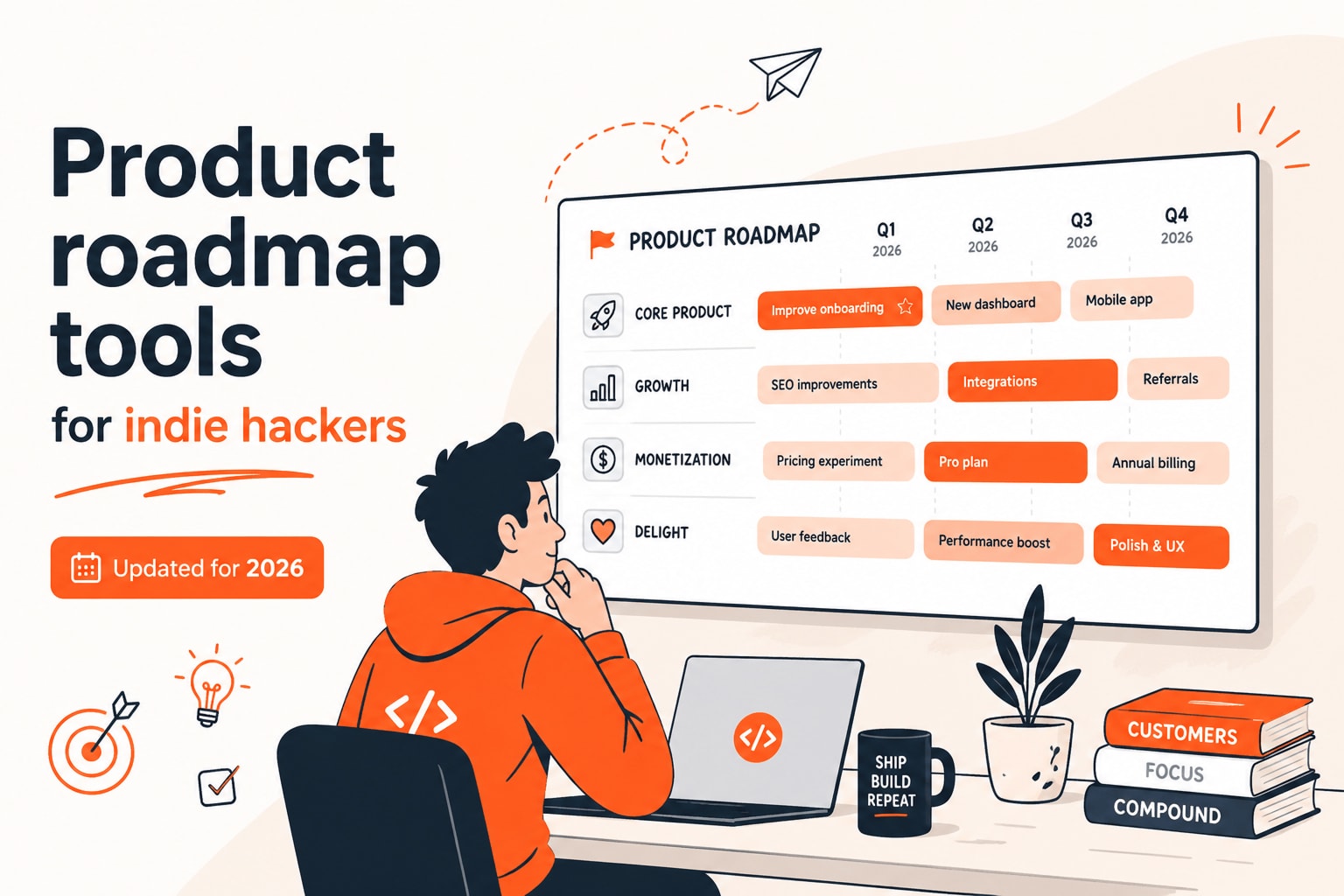
Building a software product in 2026 as a solo founder is a game of focus. You have a limited amount of time and a list of features that never seems to end. Without a clear plan, it is easy to spend weeks building things that nobody actually wants. This is where a product roadmap becomes essential.
It is not just a list of tasks for you to do. It is a communication tool that tells your users where the product is going and gives them a reason to stay excited.
For an indie hacker, the right tool needs to be lightweight. You do not have a team of product managers to maintain a complex database. You need something that gets out of the way so you can get back to building. At the same time, you want a tool that can help you validate ideas before you build them.
The following tools represent the best options available today for builders who want to stay organized without the corporate bloat.
Notion
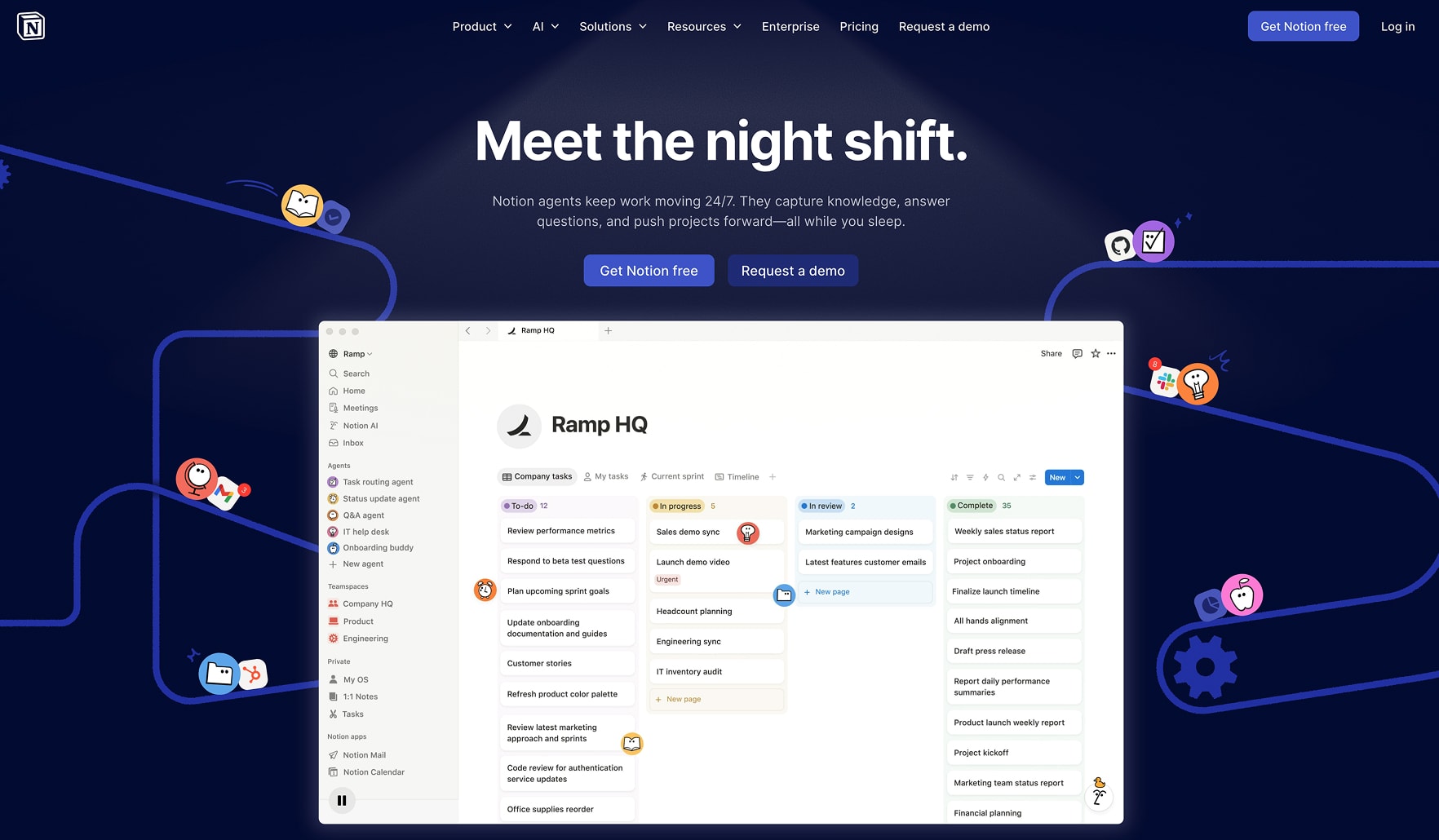
Many indie hackers start and end their search with Notion. It is a flexible workspace that allows you to build almost anything. If you want a simple list, you can make one. If you want a complex database with tags and timelines, you can do that too. The beauty of Notion is that it likely already holds your notes, your tasks, and your research. Keeping your product roadmap in the same place reduces the friction of switching between apps.
One of the biggest advantages of Notion is the template gallery. You do not have to start from a blank page. There are hundreds of free roadmap templates designed specifically for small startups. You can customize the view to show a Kanban board for your daily tasks and a gallery view for public consumption.
Many founders use a public Notion page as their official roadmap. This allows users to see what is planned without requiring the founder to set up a separate website.
However, Notion has its limits. Because it is a general purpose tool, it lacks some of the specialized features found in dedicated roadmap software. For example, it does not have a built-in way for users to vote on features unless you use a third party integration. It can also become slow if your database grows too large. If you value flexibility above all else, Notion is the top choice.
Linear
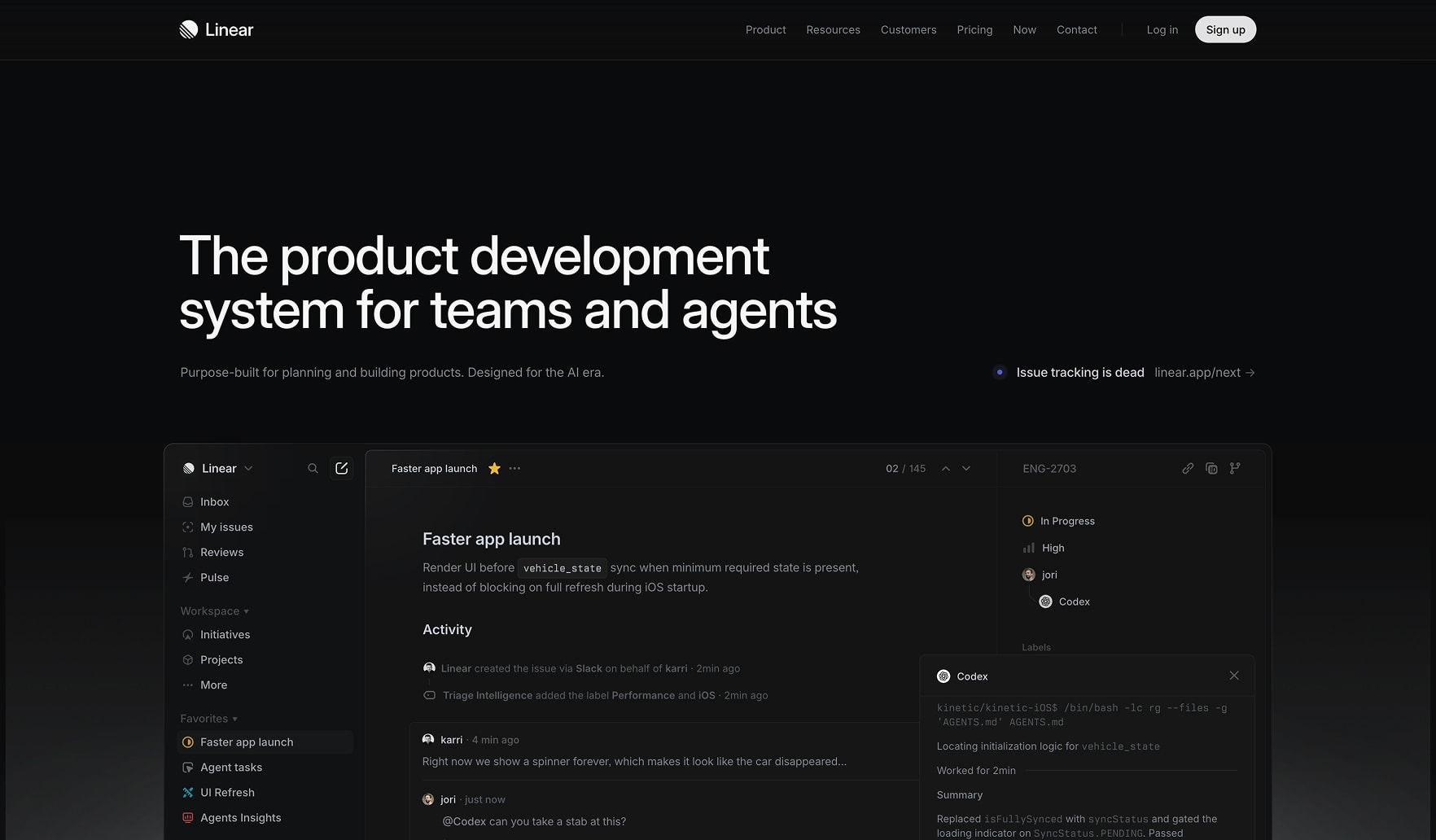
Linear has become the gold standard for engineering led startups. It is built for speed. Everything in Linear can be done through keyboard shortcuts, which makes it a favorite for developers who want to stay in flow. While it started as a pure issue tracker, its roadmap features have become quite powerful. It allows you to group issues into projects and projects into milestones. This creates a natural hierarchy that is easy to visualize.
The visual style of Linear is another major selling point. It is clean, dark, and professional. For an indie hacker, using Linear feels like using a high quality tool. It gives your project a sense of momentum. The roadmap view provides a clear timeline of when specific projects are expected to be completed. This helps you manage your own expectations as much as those of your users.
The main drawback of Linear is that it is primarily an internal tool. While there are ways to share progress publicly, it is not built for community interaction. It is excellent for planning your work and tracking your progress, but it might not be the best tool for gathering feedback from a large audience of strangers. If your focus is on execution and you want the fastest interface possible, Linear is hard to beat.
Canny
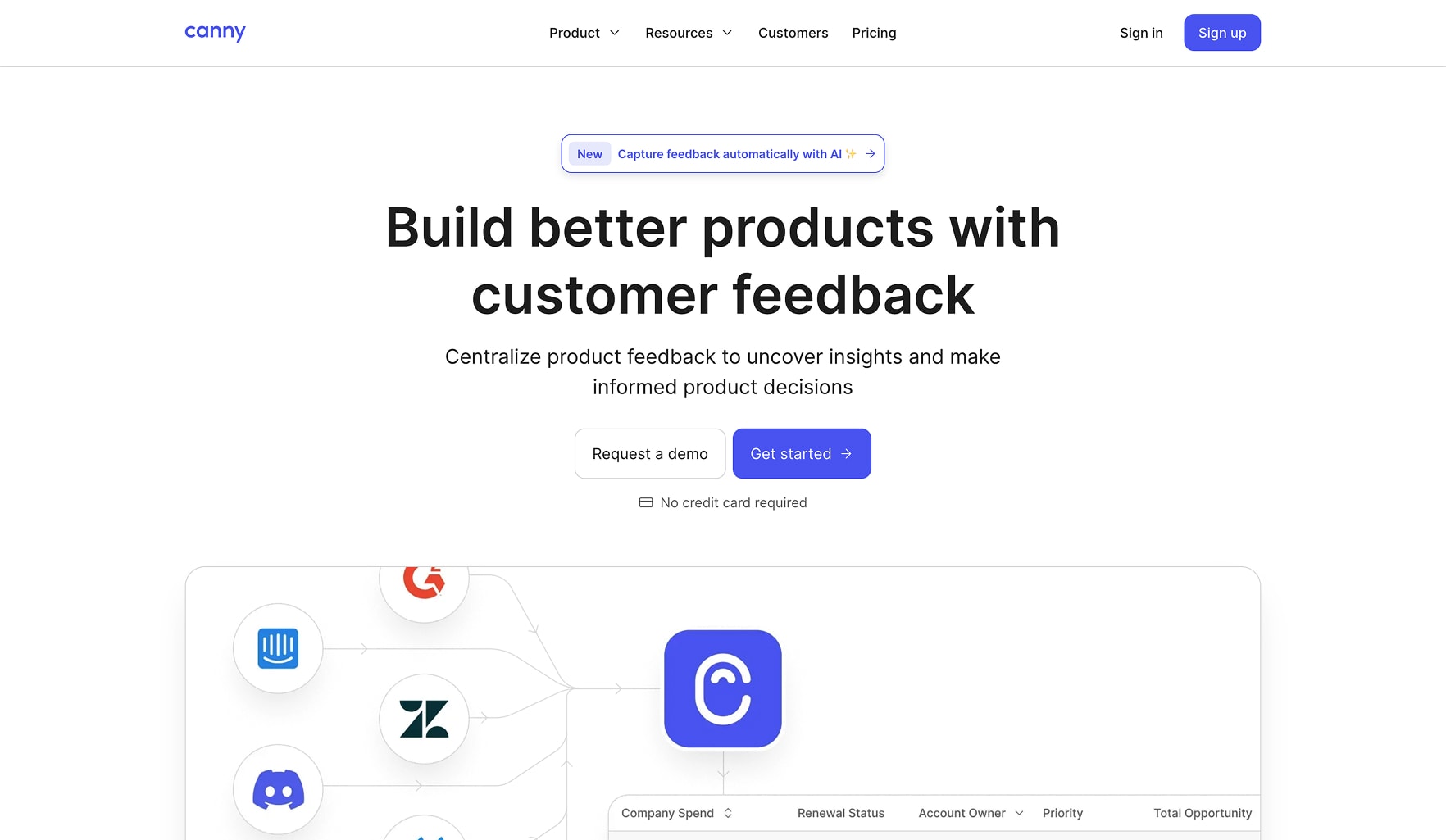
If your goal is to build a product that is driven by user feedback, Canny is the most popular choice. It focuses heavily on the feedback loop. Users can submit feature requests, and other users can upvote them. This creates a clear signal of what your audience actually cares about. Canny then allows you to move those requests directly onto a public roadmap.
For an indie hacker, this validation is priceless. It prevents you from building features based on a hunch. When you see twenty different people asking for the same integration, you know it is worth your time. Canny also handles the communication side of things. When you mark a feature as complete, Canny can automatically email everyone who voted for it. This brings people back to your product and makes them feel like their voice was heard.
The downside of Canny is the price. While they have a free tier, the paid plans can become expensive as your project grows. Some solo founders find the interface a bit too heavy for a simple side project. However, if you have a growing user base and you need a professional way to manage their requests, Canny is a powerful ally.
Trello
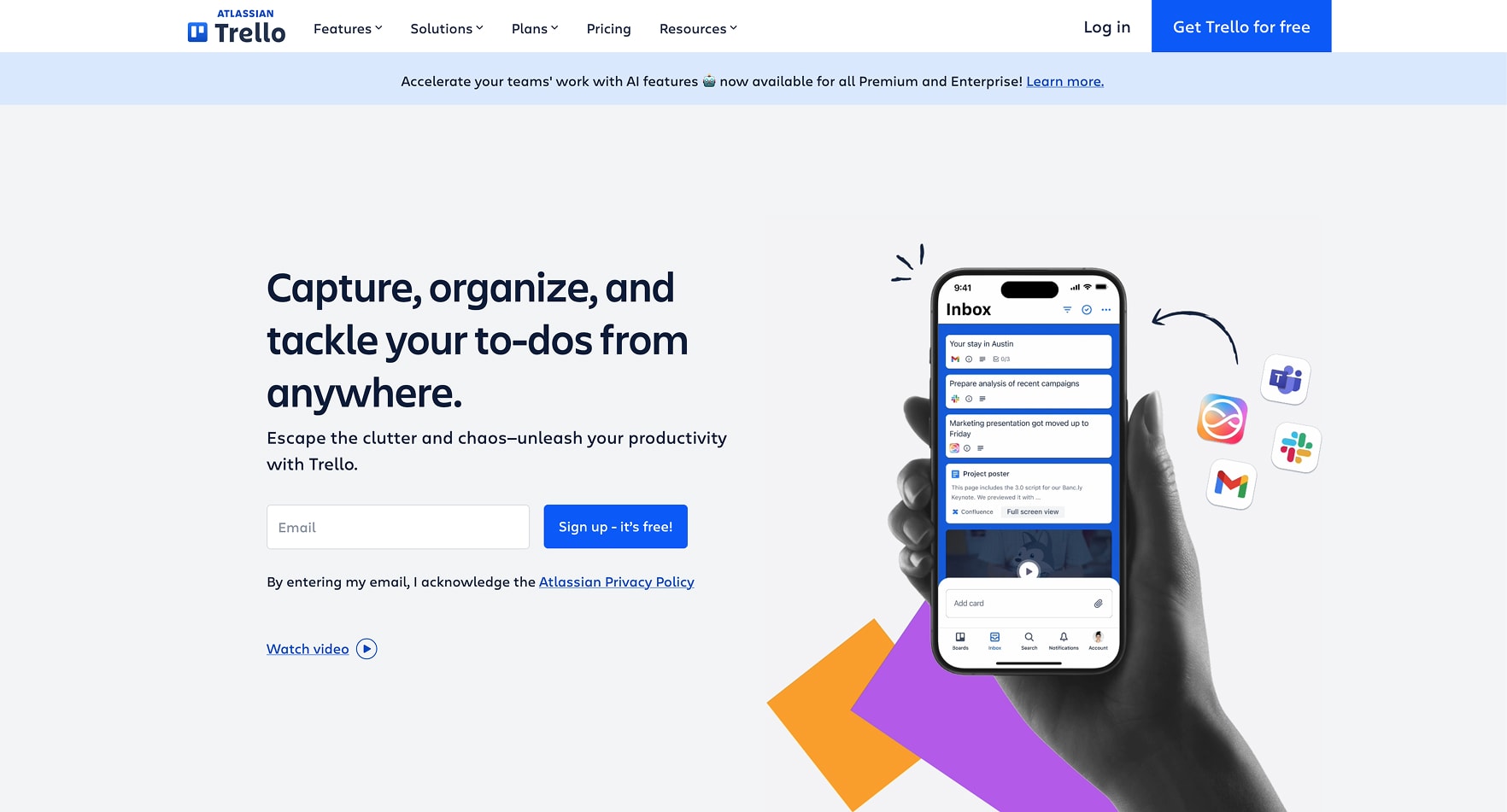
Trello is the original Kanban board and remains a staple for indie hackers. Its simplicity is its greatest strength. You have columns, you have cards, and you move them from left to right. For many solo builders, this is all they need. You can have a column for ideas, a column for things in progress, and a column for things that are shipped.
Trello is very visual. You can add covers to cards to make the board look more appealing. Because it is so widely used, almost everyone knows how to use it. If you are working with a freelancer or a part time designer, they will likely be able to jump into Trello immediately without any training. It also has a massive library of power-ups that allow you to add features like calendar views or voting.
The limitation of Trello is that it can feel a bit disorganized once you have a lot of cards. It lacks the structured data capabilities of Notion or the specialized workflows of Linear. It is a digital whiteboard. If you want something that is easy to set up and requires zero learning curve, Trello is still a great option.
Productboard

Productboard is a more advanced tool that is best suited for founders who are scaling. It is designed to help you understand what users need and prioritize your work based on data. You can pull in feedback from various sources like email, Slack, or social media and link it to specific feature ideas. This creates a central repository of knowledge about your market.
The prioritization matrix in Productboard is one of its best features. It allows you to score features based on their impact and the effort required to build them. This helps you identify the low hanging fruit that will provide the most value to your users. It also offers beautiful roadmap visualizations that you can share with stakeholders or customers.
For a brand new indie hacker, Productboard might be overkill. It has a lot of features that you might not need until you have a significant amount of feedback to manage. The pricing is also geared more toward established companies than solo builders. But if you are looking for a tool that will grow with you as you transition from a side project to a full startup, it is worth a look.
IndieRoadmaps
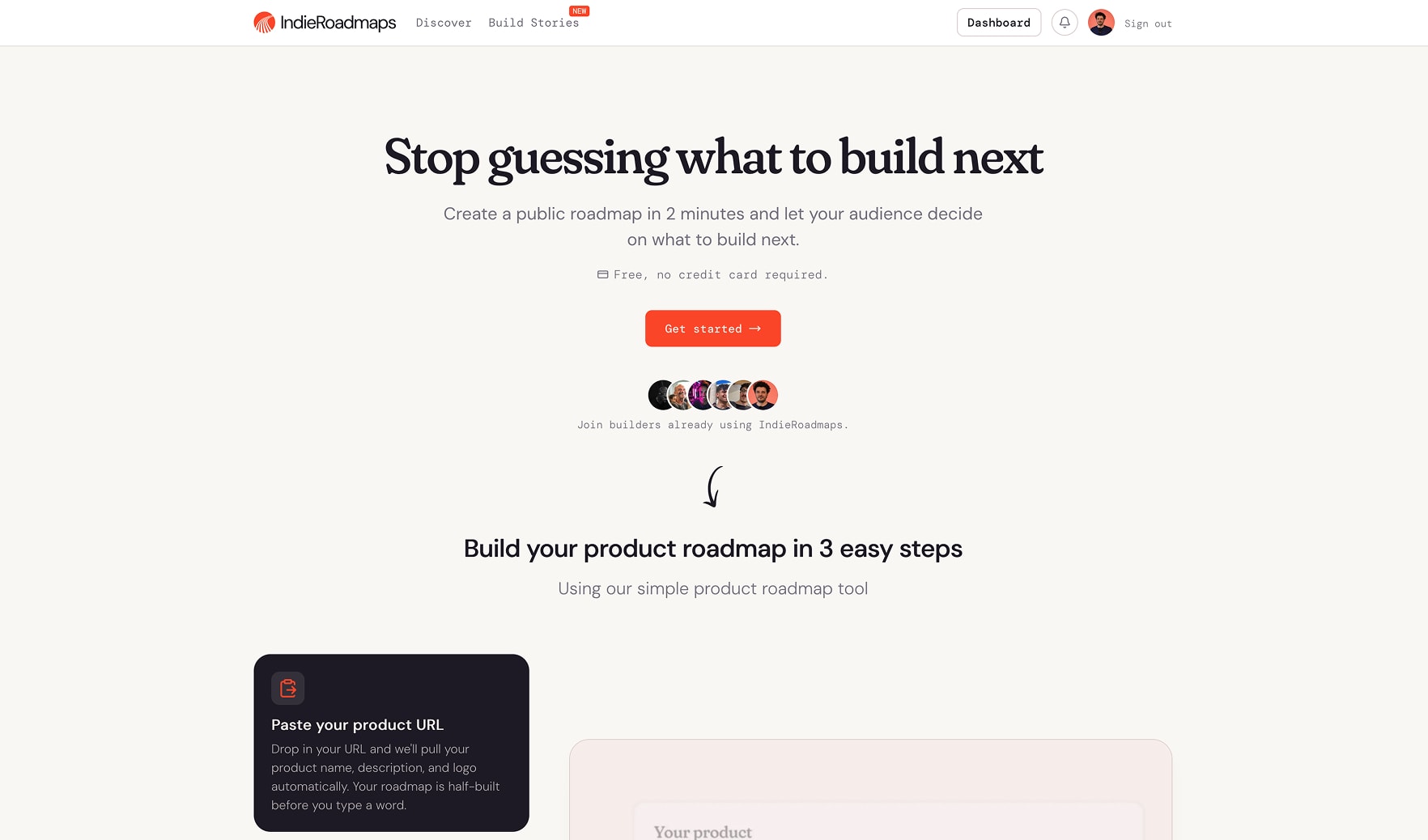
While the tools mentioned above are great for organization and feedback management, they often miss a crucial element for indie hackers: community and discovery. This is where IndieRoadmaps comes in. It was built specifically for the solo builder who needs accountability and validation.
IndieRoadmaps is more than just a place to list your features. It is a platform where your roadmap is public by default. This public nature creates a sense of accountability. When you announce that you are going to ship a feature by a certain date, the community sees it. This gives you that extra push to stay on track.
One of the biggest benefits of using IndieRoadmaps is the discovery factor. When you list your product, it appears in a feed alongside other indie projects. People who are interested in new tools can find your roadmap, vote on features, and follow your progress. This means you are getting eyes on your product before it is even fully built. It turns your roadmap into a marketing channel.
The voting system is simplified for the indie hacker experience. You do not need to manage complex spreadsheets or databases. You just add your ideas, and let the community tell you what they want. It is also completely free to get started. There is no credit card required and no hidden trial periods. It is a tool built by an indie hacker for indie hackers.
Another advantage is the SEO boost. When you create a roadmap on IndieRoadmaps.com, you get a link back to your own website. For a new project, this kind of backlink can be very helpful for building domain authority. You are not just organizing your work; you are also helping your product get found on search engines.
If you are looking for a way to stay honest with yourself, validate your product ideas with real people, and get some early traction, IndieRoadmaps is the perfect fit. It removes the friction of setting up a complex system so you can focus on what matters most: building and shipping.
The best roadmap tool is the one that you actually use
For some, that is a simple Notion page. For others, it is a high speed tracker like Linear. If you are just starting out, prioritize simplicity and validation. Do not spend too much time setting up the perfect system. Instead, choose a tool that allows you to share your progress and get feedback quickly.
A public roadmap is a signal to the world that your product is alive. It shows that you are listening to your users and that you have a vision for the future. Whether you choose a general purpose tool or a specialized platform like IndieRoadmaps, the act of planning will make you a better founder. It will keep you focused on the right tasks and help you build a product that people truly love.